Continuing and professional education has always been a part of the institution closest to the labor market. It is where employers turn for reskilling and, increasingly, where institutions find growth. The U.S. continuing education market reached nearly $67 billion in 2024, and corporate training and employer partnerships are now where these units concentrate their effort.
Delivering on that promise comes with pressure. The skills a workforce needs are changing faster than programs can be built to teach them. The World Economic Forum projects that 39% of the core skills workers rely on today will be transformed or outdated by 2030. In response, 85% of employers are prioritizing upskilling. Skill gaps are now the single largest barrier employers name to transformation.
Employers are not waiting for the next catalog. They have needs with deadlines. Consider a dean with a custom program to deliver. A regional employer needs to reskill its workforce to use a new data platform, and the timeline is in weeks. The expertise exists. The educators are ready. What slows the work is the same thing that always has: every custom request becomes a rebuild, even when much of what it requires already exists elsewhere in the institution.
When a dean brings a custom program to an intelligent curriculum platform, the work starts with the educators and their source material. Learning objectives connect to topics, topics to skills, skills to assessments, and assessments back to the outcomes the employer needs. Those connections form a knowledge graph. It holds every objective, topic, source, and outcome in one structured, traceable system. The knowledge graph is the curriculum, mapped. That is what makes it intelligent.
This is the lifecycle every program moves through. Building is faster because the platform accelerates the work that educators direct. The AI runs beneath that work, bound by what they design. Maintaining stops being a hunt, because when a source changes, the system shows everything connected to it, and the evidence for review and accreditation builds as the work happens, not after. Evolving is where it matters most. Objectives map to skills, so a program flexes as employer needs shift, with no rebuild.
Educators direct the work. The platform makes it faster. The institution owns everything it produces.
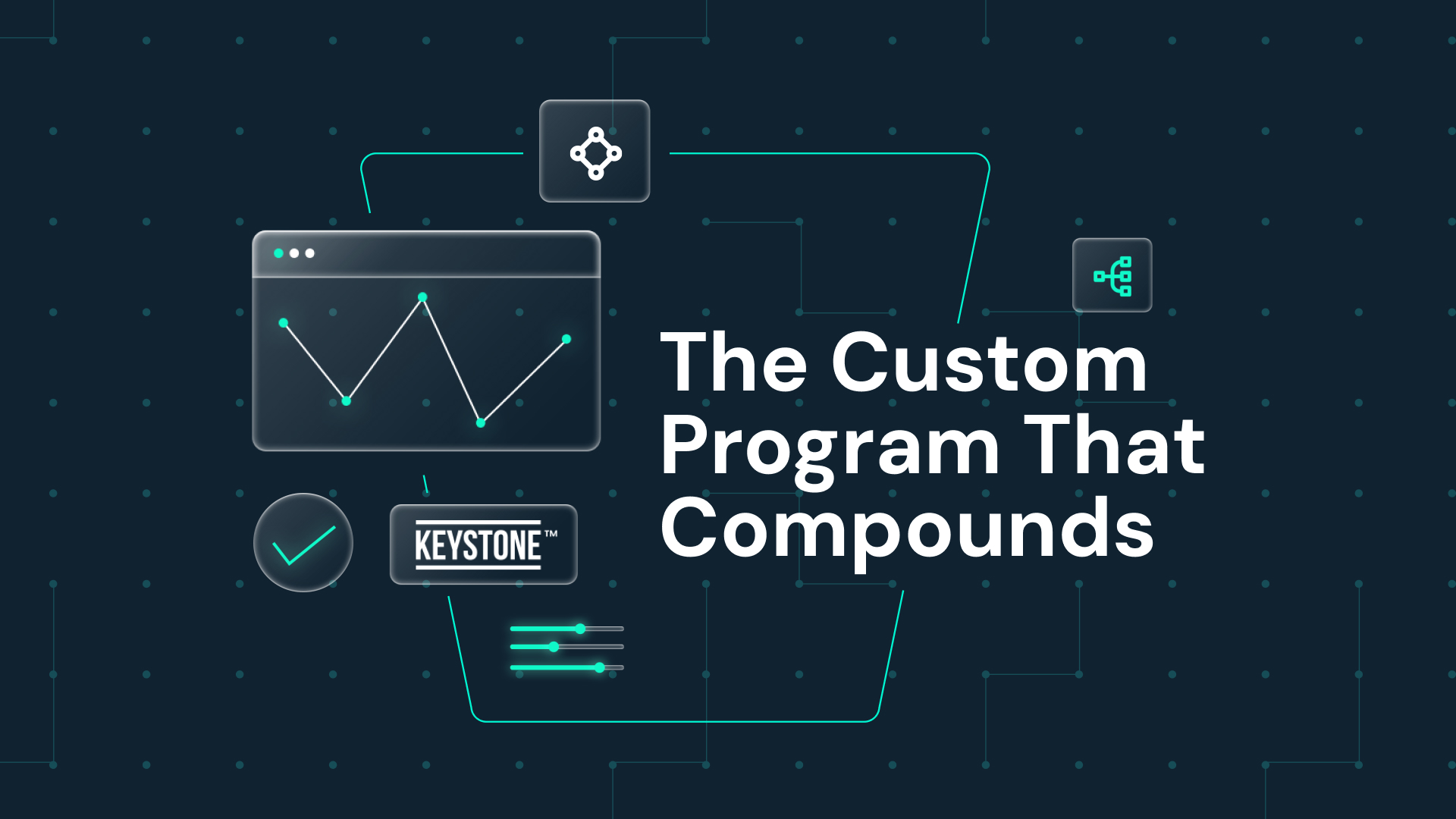
The first program is the deliverable. The curriculum, captured in the knowledge graph, becomes the asset. The skills mapped, the objectives connected, the sources verified: all of it stays in the system, owned by the institution and available to reuse and remix, at scale and at speed.
A second employer arrives with an adjacent need. The dean does not begin again. The structure is already there, ready to be reconfigured. A credit-bearing certificate can grow out of the non-credit work, and the reverse is true as well. Each program reuses what came before. Each one makes the next faster to build and easier to maintain.
The knowledge graph belongs to the institution. It is not locked to a single program or dependent on the educator who first built it. It compounds with every program added, and it endures as curriculum evolves and educators move on.
Continuing education has historically measured value one program at a time. Intelligent Curriculum changes the unit of measure. The program is still what the employer buys. The curriculum is the asset the institution keeps and builds on.Keystone™ is the platform built to make it one.
For the dean who turned one corporate engagement into a foundation for the next, the work stops starting over. For the institution behind that dean, every new program makes the curriculum more valuable than the last.
U.S. continuing education market size, 2024 (ResearchAndMarkets, via GlobeNewswire): https://www.globenewswire.com/news-release/2025/08/22/3137735/28124/en/U-S-Continuing-Education-CE-Market-Report-2025-2030-AI-Micro-Credentials-and-ChatGPT-Reshaping-the-95-Billion-Landscape.html
Workforce-aligned focus of continuing education units (UPCEA, State of Continuing Education 2025): https://upcea.edu/data-and-insights-from-the-state-of-continuing-education-2025-report/
Skill transformation, upskilling priority, and skill-gap barrier (World Economic Forum, Future of Jobs Report 2025): https://www.weforum.org/publications/the-future-of-jobs-report-2025/